


 Fmc_admin
When Is the Right Time to Upgrade Your Business? The Best Time Isn’t When Your Business Is Struggling—It’s Before It Outgrows Itself
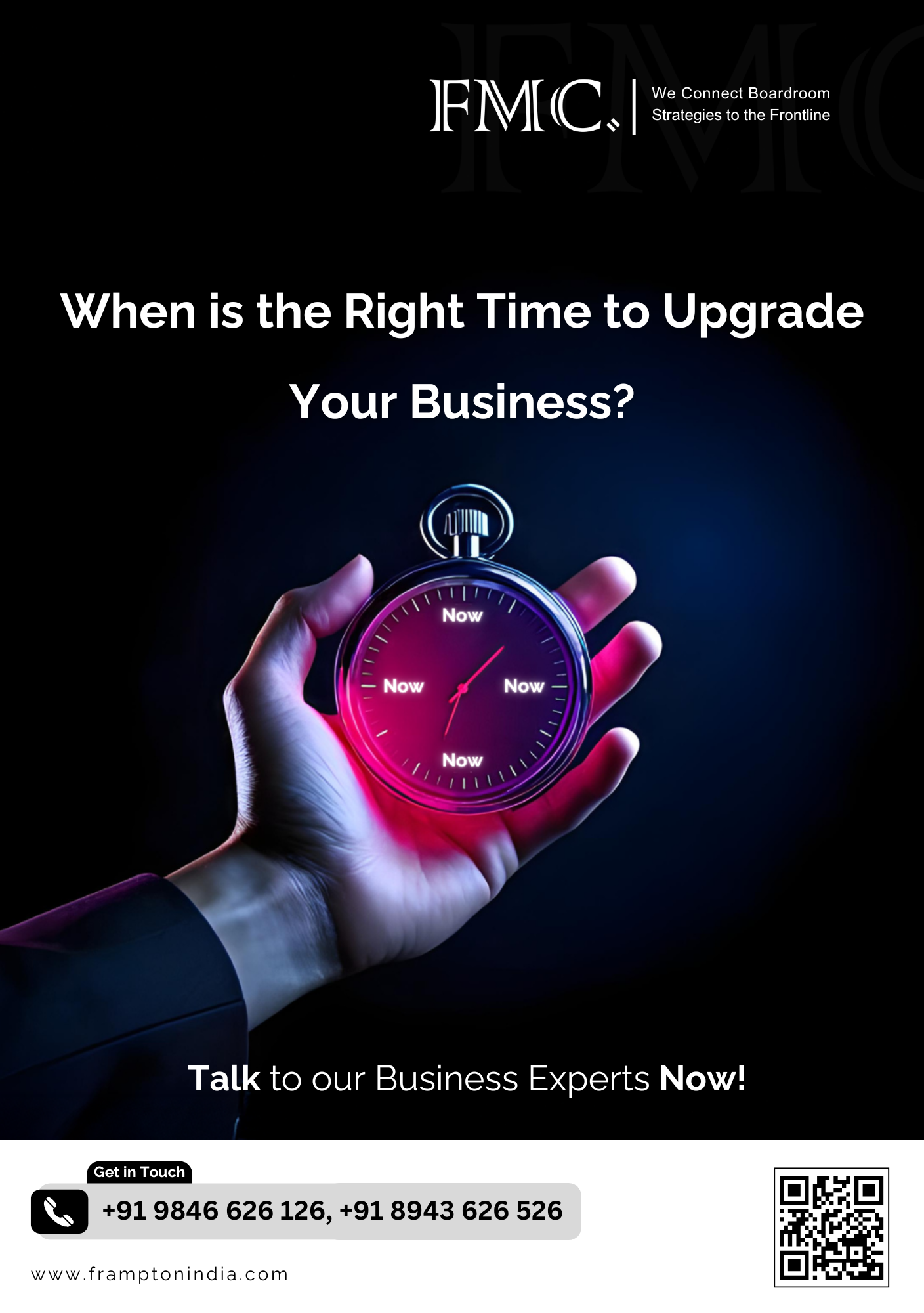
When Is the Right Time to Upgrade Your Business?
The Best Time Isn’t When Your Business Is Struggling—It’s Before It Outgrows Itself.
Many business owners believe that upgrading a business begins with buying new technology, opening another branch, or hiring more people.
It doesn’t.
A true business upgrade begins with a shift in thinking.
It starts when leaders recognize that the systems, strategies, and structures that built yesterday’s success may not be enough to achieve tomorrow’s ambitions.
The question isn’t whether your business should evolve.
The real question is:
When is the right time to upgrade your business?
For many organizations, the answer is sooner than they think.
Growth Is a Signal—Not the Destination
Success often creates its own challenges.
More customers mean more complexity.
More employees require stronger leadership.
Higher revenue demands greater financial discipline.
Expanding operations introduce new risks.
Ironically, the very growth every entrepreneur works toward can expose weaknesses that were never visible before.
The businesses that continue to grow sustainably are not the ones that react after problems arise.
They are the ones that upgrade before growth becomes difficult to manage.
Signs Your Business Has Outgrown Its Current Model
Every business reaches a stage where its existing way of operating begins to limit future growth.
You may notice that:
- Revenue is increasing, but profitability is not.
- Decision-making has become slower and more complicated.
- Teams work hard, yet productivity remains unchanged.
- The owner is involved in every important decision.
- Customers are increasing, but service quality is becoming inconsistent.
- Cash flow feels tighter despite higher sales.
- Different departments operate independently rather than collaboratively.
- Business reports arrive too late to support timely decisions.
These are not signs of failure.
They are signs that your business is ready for its next level of maturity.
An Upgrade Is More Than Technology
When people hear the word “upgrade,” they often think about software, automation, or digital tools.
Technology is important—but it is only one part of the transformation.
A complete business upgrade involves strengthening every critical function.
Strategic Direction
Is your vision still aligned with the market?
Have customer expectations changed?
Are your priorities clear for the next three to five years?
Without strategic clarity, even efficient businesses can move in the wrong direction.
Financial Management
As businesses expand, financial complexity increases.
Growth should improve profitability, cash flow, and enterprise value—not simply increase revenue.
Modern financial management provides leaders with accurate insights for confident decision-making.
Operations and Processes
Many growing businesses continue using processes designed for a much smaller organization.
An upgrade means building scalable systems that improve efficiency, consistency, accountability, and quality across every department.
Leadership and Organization
Businesses eventually outgrow founder-led management.
Sustainable organizations develop capable leadership teams, define responsibilities clearly, and establish governance structures that support long-term growth.
Customer Experience
Markets evolve continuously.
Businesses that regularly review customer expectations, service quality, pricing, and competitive positioning remain relevant while others struggle to keep pace.
Waiting Too Long Can Be Expensive
Many organizations postpone transformation because current performance appears satisfactory.
Unfortunately, businesses rarely decline overnight.
Performance typically weakens gradually.
Small inefficiencies become significant costs.
Slow decisions become missed opportunities.
Operational gaps become customer complaints.
Reactive leadership becomes organizational stress.
By the time these issues become obvious, the cost of change is often much higher than the cost of preparing earlier.
The best businesses upgrade while they are still strong—not because they are forced to, but because they are planning for the future.
Every Stage Requires a Different Business
A startup requires agility.
A growing company requires structure.
An established business requires governance.
A market leader requires innovation.
What helped your business succeed in one stage may become the very thing that limits it in the next.
Sustainable organizations continuously redesign themselves to match their ambitions.
They understand that evolution is not a one-time event—it is an ongoing leadership responsibility.
Upgrading Is an Investment in Tomorrow
Every meaningful business improvement creates long-term value.
A stronger strategy creates better decisions.
Better systems improve operational efficiency.
Stronger governance builds trust.
Clear financial visibility improves investment decisions.
Capable leadership ensures continuity.
Together, these elements transform a business from one that simply grows into one that grows with confidence, resilience, and purpose.
Upgrade Before You Need To
The most successful business leaders do not wait for disruption to force change.
They ask difficult questions while business is healthy.
They challenge existing assumptions.
They prepare for the next chapter before the current one ends.
That proactive mindset is what separates businesses that survive from businesses that lead.
Building the Next Version of Your Business
At Frampton Management Consultants (FMC), we believe every business reaches a point where it must evolve—not because it has failed, but because it has the potential to achieve far more.
As The Business Architect, we help entrepreneurs, family businesses, SMEs, and corporate organizations identify when change is needed and build the strategy, systems, governance, and execution required for sustainable growth.
Whether you are preparing for expansion, improving profitability, restructuring operations, embracing digital transformation, or strengthening leadership, we help ensure your next phase of growth is built on a stronger foundation than the last.
Because upgrading your business isn’t about changing what you’ve built.
It’s about preparing it for everything that comes next.
Final Thought
There is never a perfect moment to transform a business.
There is only a strategic moment.
The organizations that recognize it early gain momentum, strengthen their competitive advantage, and create lasting value.
Don’t wait until your business asks for change. Lead it there first.


Fmc_admin